
Everyone starts on the barrel
Beginners learn every move first on a stationary practice barrel — a padded “practice horse” with handles — and only move to the real horse when they are ready. Nobody is rushed onto a moving horse.
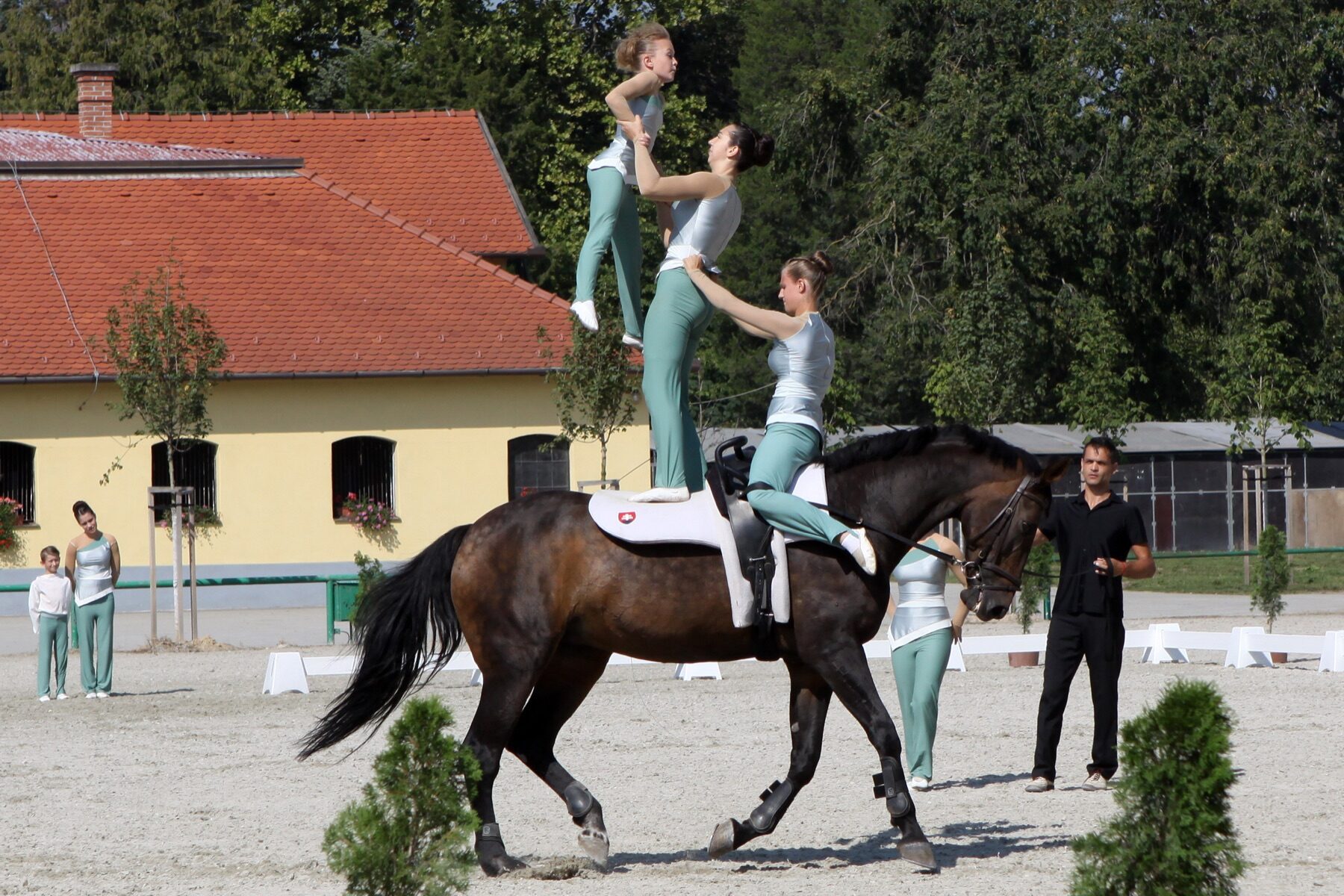
Vaulting is one of the oldest equestrian sports — gymnastics and dance performed on horseback. It is an internationally recognized discipline, and in the United States it is organized by Equestrian Vaulting USA. Most parents have never seen it, so here is the honest, plain-language version.
A trained lunger guides the horse on a long line, in a steady circle, on soft footing. The instructor’s whole attention is on the horse so your child’s whole attention can be on themselves — their balance, their position, their confidence.
That single fact changes everything for a nervous beginner. There are no reins to manage, no steering, no braking. The horse is the trainer’s job. Moving with the horse is your child’s job.
Beginners learn every move first on a stationary practice barrel — a padded “practice horse” with handles — and only move to the real horse when they are ready. Nobody is rushed onto a moving horse.
New vaulters work at the walk. The trot comes when they are ready, and the canter only for experienced vaulters. The pace of progression belongs to the child, not the calendar.
From the very first lesson, children are taught how to dismount and land safely. Falling well is a skill vaulters practice deliberately, at the walk, from day one.
Kids train together around one horse — taking turns mounted while the rest condition, stretch, and practice on the barrel. They cheer for each other. That is the point.
It is the question every parent asks, and it deserves a straight answer rather than a slogan.
Vaulting has a strong safety record — Equestrian Vaulting USA describes it as the safest of the equestrian sports, and a published medical study of vaulting clubs found an injury rate comparable to non-contact sports.
Across the sport — including at the international level — vaulters do not wear helmets while vaulting. A helmet’s rigid shell and strap can catch on the equipment or interfere with the safe, trained rolls vaulters use to land, which makes a helmet more dangerous, not less, for this particular sport. Vaulting’s safety comes from the lunger controlling the horse, the soft footing, the slow progression, and dismount training from the first lesson.
Leggings or fitted athletic pants, a snug shirt that can tuck in, and soft-soled shoes — gymnastics slippers, water shoes, or clean tennis shoes are fine to start. Long hair tied back.
No jeans, no zippers or buttons, no hoodies, no jewelry — loose things can catch on the equipment, so snug is the safe choice.
The $75 first session covers everything on this page in person — the barrel, the horse at the walk, the lunger, the team. Parents stay and watch the whole time.
Book a first session — $75